

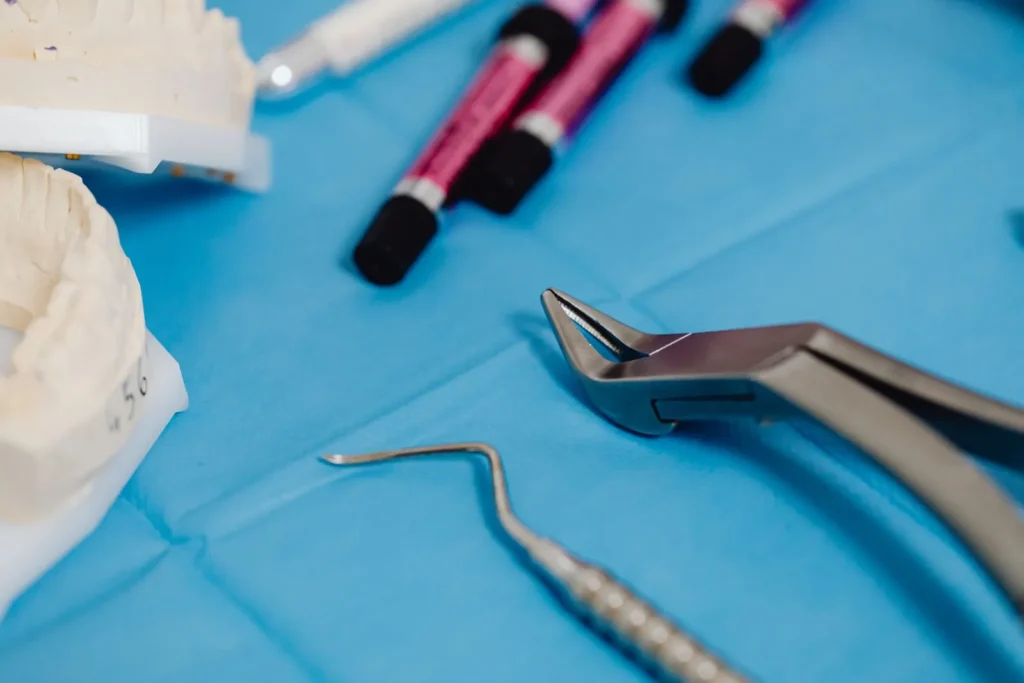
Safe removal, under local anaesthesia, of teeth that cannot be saved or are causing problems.
Tooth Extraction
Tooth extraction is performed on teeth that are damaged beyond repair by severe decay, trauma or advanced gum disease. Extraction may also be needed as part of an orthodontic treatment plan or for problematic wisdom teeth. Our priority is always to save the tooth; extraction is recommended only after other options have been considered.
The procedure
Tooth extraction is performed under local anaesthesia. Once the area is numb, the tooth is removed from its socket while protecting the surrounding tissues. Impacted teeth or teeth with complex roots may require surgical extraction.
Aftercare following an extraction
- Bite gently on the gauze placed over the extraction site for about 30 minutes.
- For the first 24 hours, do not rinse vigorously, use a straw or smoke.
- Avoid hot food and drinks on the first day; choose lukewarm, soft foods instead.
- Take the recommended medication regularly.
Healing usually progresses noticeably within a few days. If you experience heavy bleeding, severe pain, fever or swelling, contact our clinic without delay.
Treatment Process
Examination and assessment
A personalised treatment plan
Treatment and follow-up
Frequently Asked Questions
Does tooth extraction hurt?
The procedure is performed under local anaesthesia, so you will not feel pain – only some pressure.
What should replace an extracted tooth?
Leaving the gap empty can cause neighbouring teeth to shift. Implant, bridge or denture options are assessed during your examination.
Should all wisdom teeth be removed?
No. Wisdom teeth that are well positioned and cause no problems can simply be monitored. The decision is based on clinical and radiographic assessment.